Anyone who has spent ten minutes researching Zanzibar property has seen the same headline number more than once: gross rental yields of 12 to 15 percent in Paje, sometimes climbing to 14 to 18 percent on the right beachfront villa and apartments. Those figures are real. The question every honest investor asks next is the right one. What occupancy does that assume, what comes out of the gross to get to net, and what does the math actually look like once a property sits inside a sensible model? This guide is built to answer that question without flinching. In this guide, we'll explore how Paje yields compare to Nungwi, Stone Town, and Jambiani, what the headline numbers assume about occupancy, how much of the gross survives to net once management, service charges, and tax come out, how seasonality shapes the monthly cash flow, and a worked example that anyone can run on their own numbers.
The headline number, examined
The 12 to 15 percent yield that anchors most Paje conversations is not a marketing line. It is the band that professionally managed holiday rentals in the beach hotspots of the east coast and the north coast actually deliver to the owner once the cost stack has been taken out. The official Vela Breeze ROI simulation, which the developer publishes openly for each of its four unit types, places NET ROI at 13.3 percent at worst case 50 percent annual occupancy, 17.4 percent at mid case 65 percent annual occupancy, and 22.9 percent at best case 85 percent annual occupancy on the entry level Bahari studio. The pattern repeats across the Upepo one bedroom, Anga two bedroom, and Asili penthouse with very little variation. The 14 to 18 percent net yield band that anchors the honest operating model sits inside the realistic 55 to 70 percent annual occupancy a well managed Paje unit can sustain. The latest market reads from the Africanvestor put returns at 12 to 15 percent in tourism hotspots like Paje and Nungwi, with the upper end of 14 to 18 percent reserved for premium villas that combine beachfront location, private pool, and a serious management operation. The trend through 2025 has been to compress the headline range slightly while keeping the band itself intact.
A second number sits underneath the first. Stone Town heritage apartments, which sit in a different demand pool, still clear 6 to 8 percent gross on long term lets and 10 to 12 percent on well located resort apartments rented short term. A Paje studio rented as a holiday let to digital nomads and kitesurfers will land somewhere in between, depending on occupancy and how it is run. The brand of property matters, but so does what the property is asked to do.
The point of starting with the band rather than a single number is that yield is the output of a model, not a property attribute. A 14 percent gross yield assumes a specific nightly rate, a specific occupancy, a specific level of management quality, and a specific cost stack underneath. Change any of those variables and the yield moves. Most of the rest of this guide is about which variables move it and by how much.
How Paje stacks up against Nungwi, Stone Town, and Jambiani
Paje is one of four neighbourhoods that anchor the foreign buyer conversation, and the yields look very different across them.
Nungwi, on the north tip of Unguja, is the more mature resort destination. Beachfront villas there post the same 14 to 18 percent gross yield band as Paje on a professionally managed rental, and beach area apartments typically sell for $2,000 to $2,800 per square metre against detached villas at $2,200 to $3,000 per square metre. The market is deeper, the hotel infrastructure is older, and the rental funnel is more reliable across a full year. The trade-off is that the entry price is higher and the room for capital appreciation is comparatively narrower than in still rising markets like Paje.
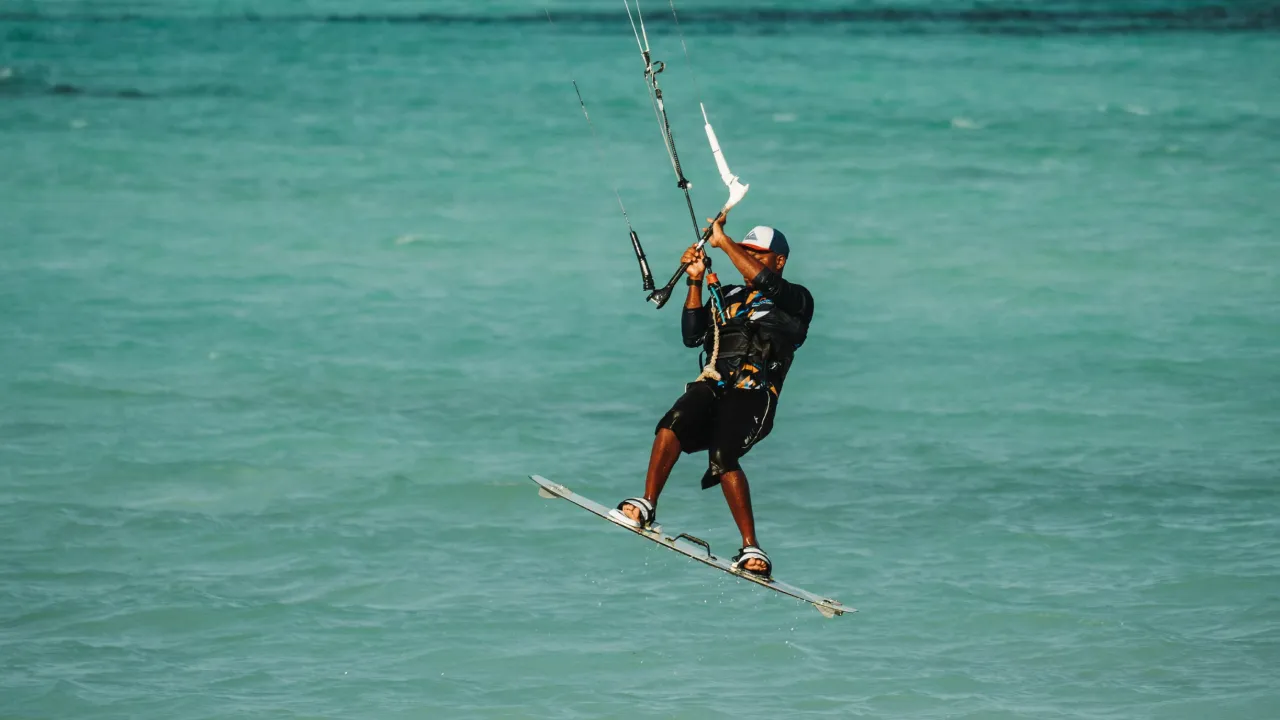
Paje itself is the kitesurfing and digital nomad capital of the East Coast. Entry-level resort apartments start around $2,100 to $2,500 per square metre, and near-beach villas and apartments typically run $2,400 to $2,800 per square metre, with luxury builds in 2025 starting to push into the $3,000 to $4,000 per square metre band. Inside the Vela Breeze development specifically, the price ladder runs from a fully furnished Bahari studio at $80,000, to an Upepo one bedroom at $135,000, to an Anga two bedroom with private pool and garden at $185,000, to the Asili three bedroom penthouse with private rooftop ocean view at $419,000, all with VAT included. Yields cluster in the same 14 to 18 percent net range across the Vela Breeze unit ladder, but the renter mix in Paje is younger, the bookings are heavier in the kite season months, and the demand pipeline includes a meaningful share of multi-week stays from remote workers. Many investors choose Paje specifically because of that nomad anchor, which lifts shoulder month occupancy in a way Nungwi does not see to the same degree.
Stone Town is the structural exception. Character apartments in the UNESCO core list for around $1,300 to $1,800 per square metre, with fully restored heritage lofts in prime lanes reaching or exceeding $3,000 per square metre. Yields are lower on paper, 6 to 8 percent gross on long-term lets and around 10 percent on well-marketed short-term rentals, but the occupancy profile is steadier and the absolute price entry is lower. A $150,000 budget that buys a small studio in Paje can buy a characterful two-bedroom in Stone Town. The investor choosing Stone Town is buying a different risk-return curve, not a worse one.
Jambiani sits just south of Paje on the same east coast strip. It is quieter, more village-rooted, and a step earlier in its development arc. Property prices have so far held below Paje and Nungwi, and tourist interest is rising steadily as the area attracts boutique resorts and longer-staying expats. Yields on well-run beachfront stock in Jambiani still sit in the same 14 to 18 percent gross band as Paje and Nungwi, but the volume of professionally managed inventory is smaller, which means an investor relying on local agencies has fewer options. For buyers who want to enter at a lower price point in a market that is genuinely emerging, Jambiani is the obvious counterpart to Paje, but the management lift is heavier.
For the broader picture across all four neighbourhoods and the supply pipeline coming online, see the Zanzibar property market outlook for the year ahead.
The occupancy assumption hiding inside the headline
The single most important variable underneath any Paje yield projection is the occupancy assumption, and most marketing decks do not show their working on this one.
The Vela Breeze ROI simulation models every unit at three endpoints. The worst case sits at 50 percent annual occupancy, or 183 nights a year, and produces a NET ROI of around 13.3 percent on a Bahari studio. The mid case sits at 65 percent annual occupancy, or 237 nights a year, and produces a NET ROI of around 17.4 percent. The best case sits at 85 percent annual occupancy, or 310 nights a year, and produces a NET ROI of around 22.9 percent. The same three point spread holds with very little variation across the Upepo, Anga, and Asili units. A 23 percent net yield does not happen at average occupancy. It happens at near peak occupancy across the whole year, which is the upper bound of what a serious management operation can deliver in a top performing year.
The real distribution sits between those two endpoints. Professionally managed villas in Paje commonly hit 50 to 65 percent average annual occupancy with peaks above 85 percent in the high season months. The most recent 2025 and 2026 data confirm this. Prime tourism zones including Paje, Nungwi, and Kendwa achieve 75 to 90 percent occupancy during high season with off season averages of 55 to 70 percent. Stone Town apartments hold a steadier 65 to 80 percent annual occupancy thanks to year round business and expatriate demand.
The 2023 island wide annual hotel occupancy of about 62 percent remains the most honest baseline for stress testing a Paje yield model. December 2024 saw the island hit 92.4 percent hotel bed occupancy, and 2025 set several new monthly arrival records, but those peaks are not a full year story. An investor who underwrites a Paje purchase at 80 percent annual occupancy is underwriting the upside scenario. Underwriting at 50 to 60 percent gives a sturdier base case. The headline 14 percent gross yield holds at the upside. The honest base case yield sits a few points lower.
There is a separate occupancy story for owners who run their own listing without serious professional management. AirROI's recent 2026 Paje dataset has the average Airbnb listing in Paje booked for about 41 percent of available nights at a $50 average daily rate, generating about $7,482 of annual revenue. AirROI's broader 2025 to 2026 read on the typical Paje listing shows 32.4 percent occupancy at a $95 nightly rate. Those numbers are not the same as the professionally managed villa figures. They are the unmanaged average, which is the floor, not the band. An apartment placed under serious management in a strong location lifts comfortably above this floor. An apartment that is listed and forgotten about does not.
The takeaway is simple. The headline 12 to 15 percent gross yield assumes both a strong location and a serious management operation behind it. Strip either of those two variables out and the yield drops materially.
From gross to net: the deductions that matter
A gross yield is the rental revenue divided by the all in purchase price. A net yield is what is left after the running costs come out. The gap between the two is where most investor confusion sits, and the deductions on a turnkey Paje development are structured rather than ad hoc.
The single largest deduction is the rental programme structure itself. On the official Vela Breeze model, a 5 percent agency fee comes off the top of gross revenue, a fixed annual service fee comes off next, and the remaining gross is then split 60 percent to the owner and 40 percent to the operator. The 40 percent operator share is the price of a fully managed turnkey programme that covers guest acquisition, dynamic pricing, multilingual concierge, housekeeping, key handover, and the day to day running of the rental. It is the equivalent of the 20 to 30 percent of gross that a Paje agency would charge to manage a short let on its own, but it bundles the entire hospitality stack rather than just the booking and cleaning function. Owners who self market a unit at the lower end of the management fee scale will keep more of the gross, but they will also do meaningfully more of the work, and the headline yields the Vela Breeze simulation produces assume the managed structure.
The second deduction is the fixed annual service fee that funds the building's communal operation. For the Vela Breeze units this runs at $890 for a Bahari studio, $1,610 for an Upepo one bedroom, $2,300 for an Anga two bedroom with private pool and garden, and $5,450 for an Asili three bedroom penthouse. The fee covers 24 hour community security, community cleaning and garbage disposal, gardening, and private pool maintenance. It is a fixed line in the model rather than a percentage of revenue, which means it bites harder at lower occupancy and lighter at higher occupancy.
The third deduction is rental income tax. Because Vela Breeze is a ZIPA approved development, every owner in the project benefits from a flat 15 percent rental income tax on Zanzibar sourced revenue, irrespective of their personal residency status. The Class C11 investor residence permit, available to buyers committing $100,000 or more in an approved development, brings the separate benefit of two year renewable residency in Zanzibar, but the 15 percent rental tax rate already applies to all Vela Breeze owners by virtue of the project's ZIPA approval. Owners of properties outside a ZIPA approved development would face the standard rate, which goes up to 30 percent on a sliding scale, but that line does not apply to a Vela buyer. Inside the Vela Breeze simulation, the 15 percent is applied to the owner's 60 percent share of the rental revenue after the operator split has been taken out.
The fourth deduction is the cluster of smaller recurring property charges that sit outside the rental programme. Foreign held properties pay annual ground rent of $0.35 per square metre on urban land, and a flat $22 annual property tax per dwelling sits on top of the ground rent. Both are token amounts in the context of a holiday rental, but they have to be on the spreadsheet.
The fifth deduction is the hotel levy and tourism related charges on the short term rental side. The 2025 market data points to a hotel levy of roughly 1.5 to 5 percent of gross revenue, depending on classification and how the property is registered.
Stacking these together gives a stable rule of thumb. On the official Vela Breeze model, with daily rates of $125 for a Bahari studio, $210 for an Upepo one bedroom, $295 for an Anga two bedroom, and $675 for an Asili penthouse, the net rental yield to the owner lands in a 14 to 18 percent band of the purchase price across the realistic 55 to 70 percent annual occupancy range that a well managed Paje unit can sustain. That band rises into the low twenties at the 85 percent best case occupancy and softens into the low teens at sustained low season occupancy. The 14 to 18 percent band is the honest working number for an investor who wants to underwrite a Paje purchase without leaning on the upside scenario.
For a full breakdown of every fee that hits a Zanzibar buyer at purchase and during ownership, see the taxes and fees guide for foreign buyers.
Seasonality and what it does to monthly income
A 14 percent gross yield over a full year hides a monthly income shape that swings substantially. Paje does not deliver a smooth twelfth of its annual revenue each month, and an owner who underwrites the cash flow without that shape in front of them will be unpleasantly surprised in April.
The 2025 monthly arrival data sets out the curve clearly. January 2025 brought in 84,069 international visitors to the islands. February delivered 82,750. March stepped down to 60,345 as the long rains began. The mid year months delivered the strongest traffic, with July at 98,370 and August at a record 105,506. October brought in over 86,000, November over 70,000, and December 2025 closed the year at 100,729. April is consistently the softest month across the island, and AirROI's Paje read for 2025 and 2026 confirms April as the local low and January as the local high.
For a Paje rental specifically, the practical pattern looks like this. December through February is the southern hemisphere summer peak, with European holidaymakers driving high bookings and high nightly rates. June through October is the dry season high, with the steadiest stream of European and Gulf visitors. April and May are the long rains, with sharp drops in occupancy and pressure on nightly rates. November is a shoulder month that has been getting stronger every year. A model that assumes uniform monthly revenue across the calendar will overshoot in April and undershoot in August.
The good news is that two distinct rental strategies can blunt the seasonal swing. The first is to actively work the kitesurfing and digital nomad shoulder months by accepting multi week stays at a discount in May and November. The second is to mix short term holiday lets in the peak with a single longer term tenant in the rainy months. Both approaches lift the annual occupancy above what a pure short stay listing would deliver, and both push the realised net yield closer to the upper end of the band.
The bottom line is that Paje is structurally a two peak market with a clear rainy season trough. The investor who plans for that shape ends up with a model that survives reality. The one who treats every month as the same is the one who is later confused about why the numbers do not match the brochure.
A worked example: the four Vela Breeze units
The cleanest way to make all of the above concrete is to walk through the official Vela Breeze ROI simulation for each of the four unit types. Vela publishes the model openly, with worst case, mid case, and best case scenarios that an investor can plug straight into their own threshold. The figures below come directly from the Vela Breeze ROI simulation document and reflect the deduction stack laid out earlier in this guide.
Bahari, the studio at $80,000.
The entry level unit in the Vela Breeze development is a one bedroom studio at $80,000, VAT included, delivered fully furnished. The rental model uses a $125 daily rate across all three scenarios. Gross revenue runs from $22,875 at worst case 50 percent occupancy, to $29,625 at mid case 65 percent occupancy, to $38,750 at best case 85 percent occupancy. After the $890 fixed annual service fee, the 5 percent agency fee, the 60/40 owner to operator split, and the 15 percent withholding tax on the owner's share, net revenue to the owner lands at $10,629 worst case, $13,899 mid case, and $18,320 best case. That translates to a NET ROI of 13.3 percent worst case, 17.4 percent mid case, and 22.9 percent best case. Years to breakeven on rental income alone run from 7.53 worst case, to 5.76 mid case, to 4.37 best case.
Upepo, the one bedroom apartment at $135,000.
The one bedroom apartment is priced at $135,000 with VAT included and uses a $210 daily rate. Across the same three occupancy scenarios, gross revenue runs from $38,430, to $49,770, to $65,100. After the $1,610 fixed service fee, the 5 percent agency fee, the 60/40 split, and the 15 percent withholding tax, net revenue to the owner sits at $17,798 worst case, $23,293 mid case, and $30,720 best case. NET ROI lands at 13.2 percent, 17.3 percent, and 22.8 percent. Years to breakeven on rental income alone run from 7.59, to 5.80, to 4.39.
Anga, the two bedroom apartment with private pool and garden at $185,000.
The two bedroom apartment with private pool and garden is priced at $185,000 with VAT included and uses a $295 daily rate. Gross revenue runs from $53,985 worst case, to $69,915 mid case, to $91,450 best case. After the $2,300 fixed service fee, the 5 percent agency fee, the 60/40 split, and the 15 percent withholding tax, net revenue to the owner sits at $24,982, $32,701, and $43,135. NET ROI lands at 13.5 percent, 17.7 percent, and 23.3 percent. Years to breakeven on rental income alone run from 7.41, to 5.66, to 4.29.
Asili, the three bedroom penthouse with private rooftop ocean view at $419,000.
The flagship penthouse is priced at $419,000 with VAT included and uses a $675 daily rate. Gross revenue runs from $123,525 worst case, to $159,975 mid case, to $209,250 best case. After the $5,450 fixed service fee, the 5 percent agency fee, the 60/40 split, and the 15 percent withholding tax, net revenue to the owner sits at $57,068, $74,729, and $98,603. NET ROI lands at 13.6 percent, 17.8 percent, and 23.5 percent. Years to breakeven on rental income alone run from 7.34, to 5.61, to 4.25.
The pattern across all four units.
The simulation produces a remarkably consistent NET ROI band across the unit ladder. At worst case 50 percent occupancy, every unit lands at roughly 13 percent. At mid case 65 percent occupancy, every unit lands at roughly 17 percent. At best case 85 percent occupancy, every unit lands at roughly 23 percent. The honest 14 to 18 percent working band sits across the upper half of the realistic operating range, and it applies to whichever unit a buyer chooses. The studio and the penthouse follow the same curve. The difference is the absolute dollar size of the income, not the yield percentage.
The Vela Breeze simulation also runs a 4 year capital appreciation projection on each unit, with worst case sale prices of $117,000 for Bahari, $195,000 for Upepo, $270,000 for Anga, and $615,000 for Asili. Mid case 4 year sale prices come in at $126,000, $213,000, $290,000, and $660,000. Best case 4 year sale prices climb to $144,000, $245,000, $335,000, and $762,000. Capital appreciation as a percentage of the purchase price runs at roughly 45 to 47 percent worst case, 56 to 58 percent mid case, and 80 to 82 percent best case, with very little variation between unit types. Combined with 4 years of rental income, the total ROI over 4 years sits at around 100 percent worst case, 127 percent mid case, and 172 percent best case across every unit in the development. These are headline numbers that any investor should stress test against their own occupancy assumptions, but they sit inside the official simulation that Vela makes available to prospective buyers.
For more on how foreign owners run those numbers and what the typical buyer asks before signing, see the top 10 questions about buying real estate in Zanzibar.
What makes one Paje apartment let better than another
Two apartments on the same Paje strip can produce yields that differ by three or four percentage points, and the reasons are almost always the same.
Location within Paje. The strongest performing units are within easy walking distance of the main beach, the cafes, the coworking spaces, and the kitesurfing schools. A studio three blocks off the beach can produce 70 to 80 percent of the nightly rate of a comparable unit one block off the beach, and the occupancy gap is wider still. Buyers who optimise on price per square metre without thinking about footprint distance to the beach often regret it inside two seasons.
Finish and amenities. A modern, sensibly designed kitchen and bathroom add a real premium on nightly rates. Air conditioning that actually works during the humid months is not optional. A backup generator is the difference between a five star review and a one star review during one of the island's predictable power blips. A small pool, even a plunge pool, lifts both occupancy and nightly rate measurably in the villa segment. The Vela style developments that integrate solar, water saving systems, and reliable backup power outperform their headline yield projection more often than they miss it.
Management quality. The gap between a well marketed listing and an unmanaged one is the single biggest controllable variable in the model. The AirROI 2025 to 2026 read for the average Paje listing of 32 to 41 percent occupancy at $50 to $95 nightly rates is the floor. The 50 to 65 percent professional management baseline, with peaks of 75 to 90 percent in high season, is the upside. The difference is dynamic pricing, professional photography, multilingual guest communication, and a real maintenance and cleaning operation. None of these are exotic, but they are not free.
The presence of a community amenity stack. A Paje apartment inside a serviced development with a pool, gym, restaurant, coworking space, and 24 hour security commands a measurable nightly rate premium against the same square metres in a standalone building. The Vela Paje project sits inside this group of approved, foreign buyer ready developments. The cost shows up in higher service charges. The benefit shows up in higher occupancy and stronger nightly rates.
The combination of these four variables explains most of the spread between a unit that delivers the headline 14 percent gross yield and one that delivers 8 or 9 percent in practice. Get all four right and the upside scenarios in the model become realistic. Get any two of them wrong and the base case becomes the upside.
Where Paje yields sit heading into 2026
The market backdrop for 2026 is unusually supportive. Zanzibar closed 2025 with 917,167 international arrivals, a year on year increase of nearly 25 percent on 2024. The one million annual visitor milestone, which has been a forward projection in every Vela article for years, has now formally been reached, with the 2026 Z Summit confirming a touch over 1 million arrivals and a tourism contribution of about $1.1 billion to the islands' economy. January 2026 already came in at 100,216 visitors, a further 19.2 percent year on year increase. The Abeid Amani Karume International Airport upgrade is on track to add 1.4 million annual passenger capacity by mid 2026, which removes infrastructure as a binding constraint on tourism for the rest of the decade. The supply pipeline is genuinely tight, with only 600 to 800 new investment grade units expected across 2025 and 2026 combined and a structural housing gap on the islands of roughly 60,000 units.
For Paje specifically, the prevailing 2026 outlook holds the net yield band at 14 to 18 percent on the Vela Breeze model across realistic operating occupancy, with a 13 percent worst case floor at 50 percent occupancy and a 23 percent ceiling at 85 percent best case occupancy. The simulation's 4 year capital appreciation projection layers another 45 to 80 percent of return on top of the rental income across worst case to best case scenarios. Property prices in Paje look set to climb at a base case of 5 to 8 percent per annum, with a bull case of 10 to 12 percent if tourism continues its current pace and direct flight capacity expands as scheduled.
The combination of rising prices and stable headline yields is the right shape for an investor who wants both income and appreciation, and it is unusual in any global comparison. The risk is not in the model. The risk is in the assumptions that go into the model. An investor who picks a strong location, insists on quality management, and underwrites at 55 to 65 percent annual occupancy rather than 85 percent is buying into a yield that will hold up in the year ahead.
Final thoughts
The honest answer to the question that opens this guide is that a well chosen Paje apartment, in a strong location, run by a serious management operation, can realistically deliver net yields in the 14 to 18 percent band over a full year on the official Vela Breeze model, with a 13 percent floor at 50 percent worst case occupancy and a 23 percent ceiling at 85 percent best case occupancy. Layer in the 4 year capital appreciation projection of roughly 45 to 80 percent on top of that rental income, and the total 4 year ROI lands between about 100 percent and 172 percent across worst case to best case scenarios. The headline numbers are not exaggerated. They are conditional on assumptions that an investor needs to understand and stress test. The same Bahari studio that delivers 22.9 percent net at 85 percent occupancy is the same studio that delivers 13.3 percent net at 50 percent occupancy. Both numbers are real. Both belong in the model.
Vela's view is that the right way to underwrite a Paje purchase is to model the base case at a 55 to 65 percent annual occupancy and check that the resulting net yield still meets the investor's threshold. If it does, the upside scenarios are a bonus. If it does not, the property is the wrong one, or the management plan needs more work. Headline yields sell. Honest yields hold up.
Ready to take the next step? Vela's team is here to help you run the numbers on a Paje studio, apartment, or villa against your own threshold, and to walk you through the developments, the deduction stack, and the realistic occupancy you can plan around. Reach out for a personalised conversation, and we will build the model with you, not for you. Karibu (welcome) to Paje

