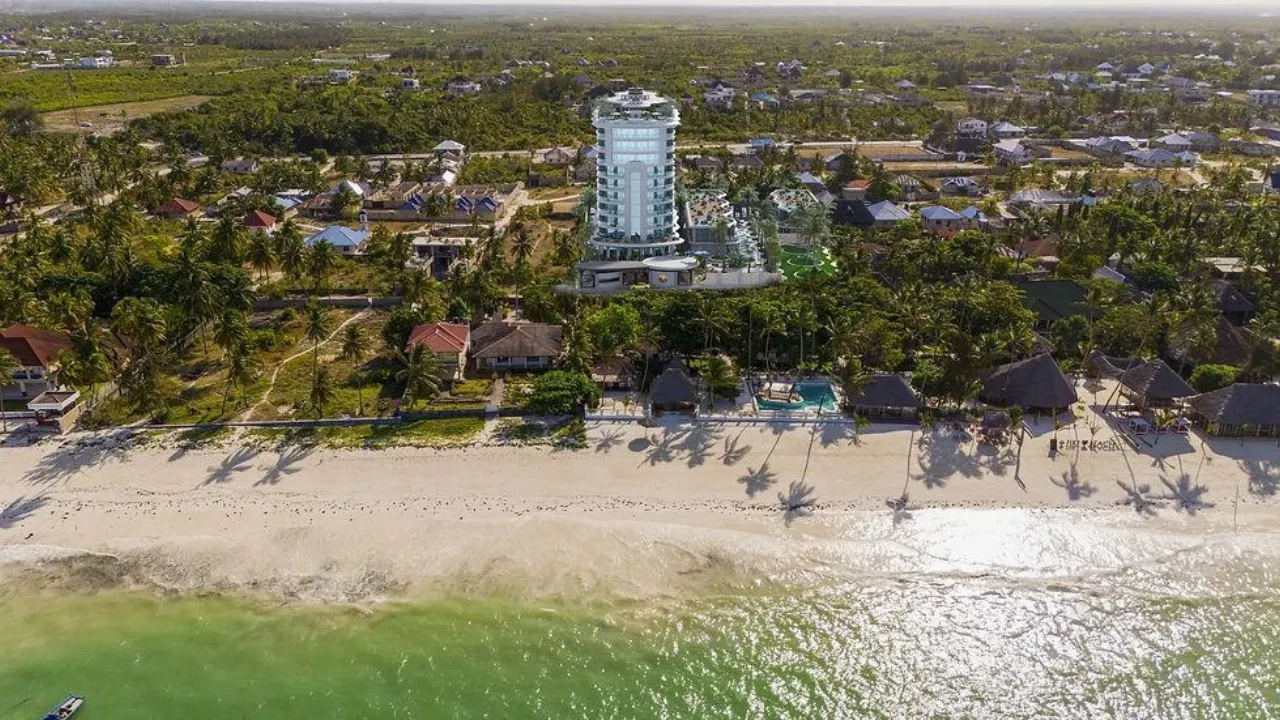
Every strong market eventually produces the same anxious reader: the one who has watched prices climb for five years and now wonders whether they are researching an opportunity or a museum. Whether Zanzibar property is still a good investment after a decade of headlines is the right question to ask, and it deserves better than the two answers it usually gets, the developer's reflexive yes and the cynic's reflexive bubble. This article gives it the honest treatment: the actual price history, the case against buying now stated fairly before it is answered, the case that this market is still early, what late genuinely looks like elsewhere, and the signals worth watching from here. In this guide, we'll explore all of it, in that order, with the numbers on the table.
The fear of arriving late
The fear has a specific shape, and naming it precisely is the first honest step. It is not a fear that Zanzibar is bad; the reader researching this question has usually already concluded the island is attractive. It is a fear about position in a queue: that the buyers of 2019 to 2022 took the real appreciation, that today's prices already contain the good news, and that the newcomer of 2026 is providing the exit for the earlier arrivals rather than joining them.
That fear deserves respect because it is sometimes correct, in some markets, at some moments. Markets do run ahead of their fundamentals, latecomers do fund early exits, and a phrase like "everyone is buying there now" has ended badly often enough to earn its reputation. The discipline this article applies is the only one that separates those cases from the others: compare the price history against the demand and supply fundamentals, and see which one is ahead of the other. The conclusion, previewed plainly, is that Zanzibar's fundamentals are still ahead of its prices, but the reader should watch that conclusion being earned rather than take it on trust.
What the price history of Zanzibar property actually shows
Start with what has actually happened, because the fear is usually calibrated to headlines rather than data.
The index since 2019
Setting 2019 as a base of 100, the island-wide residential price index stood at roughly 160 by 2024, a compound annual growth rate of about 10 percent in nominal dollar terms. The sub-markets diverged in instructive ways: Nungwi compounded at 11 to 12 percent to an index around 176, Paje and the east coast at roughly 12 percent to the mid-170s, while Stone Town's heritage stock grew a steadier 6 to 7 percent to the mid-130s. Raw land told the same story at its own scale, with beachfront plots moving from around $18 to $24 per square metre in 2019 to $23 to $35 by the mid-2020s. The full data set, area by area, sits in the Zanzibar property price index and ROI benchmarks.
What compound growth does and does not imply
Now the honest reading of that series. Ten percent compounding for five years is strong growth, and it does mean the 2019 discounts are gone; nobody buying today buys at yesterday's prices, and this article will not pretend otherwise. What the series does not show is the signature of a bubble, which is prices detaching from income. Through the same period, rental yields in the beach hotspots held their 12 to 15 percent gross band rather than compressing toward zero, which is what happens when prices inflate faster than the earnings beneath them. A market where the yield survives the appreciation is a market being repriced by income growth, not by speculation alone. Even the pandemic, the hardest demand test available, saw values hold firm and then accelerate, and the sources' bearish case for the years ahead is slower growth, on the order of 3 to 7 percent annually, rather than decline, precisely because the market remains fundamentally undersupplied. The optimistic case in the same sources runs to high single digits or low teens if tourism and foreign investment stay strong, which brackets the honest range of expectations.
One structural feature deserves special weight in the bubble question: this boom was built almost entirely without leverage. Local mortgage rates around 17 percent mean speculative credit plays essentially no role here; buyers arrive with cash or developer installments, which caps how far prices can inflate beyond what real money is willing to commit. The classic bubble anatomy, cheap debt chasing appreciation until the credit turns, has no engine in a cash market. What this market can suffer is a demand slowdown; what it cannot easily suffer is a leverage unwind, and the difference matters enormously for what a bad year looks like.
The case that the window has closed, stated fairly
A fair version of the bear case runs like this, and none of it is silly. Entry prices have risen 60 percent or more in five years, so the arithmetic of the early buyers cannot be repeated from today's base. Some of the visible tailwinds, the airport expansion, the visa reforms, the one million visitor story, are now widely known, and known news tends to be priced news. Supply is responding, with new projects launching across the coasts, and every emerging market eventually meets the year its pipeline overshoots its demand. Yields, while still high, face the same gravity: more professional stock competing for the same guests should compress nightly rates at the margin. And the wider world offers no guarantees, since tourism-dependent economies carry concentrated exposure to shocks nobody schedules.
Held together, this case says: the extraordinary phase is over, the ordinary phase has begun, and ordinary phases reward less and forgive less. The correct response is not to rebut every point, several are simply true, but to test whether they add up to "too late" or to "later than 2019," which are very different verdicts. That test is the next section.
The case that the market is early
The counter-case does not deny the price history. It locates today's prices against demand, supply, and the island's own development timeline, and finds the gap still wide.
Arrivals versus supply
The demand line is steep and verified: 917,167 international arrivals in 2025, up nearly 25 percent year on year, the one million annual milestone formally crossed, January 2026 up a further 19.2 percent, and a guest profile, two thirds European, staying around 8 nights, that books exactly the accommodation this market builds. Against that, the supply line is nearly flat: on the order of a few hundred new units a year island-wide, constrained by construction costs, financing at local rates around 17 percent, and the finite quantity of well-located coast. A market where demand compounds at double digits and supply arrives in the hundreds of units is not a market whose window has closed. It is a market whose queue is lengthening on the buyer side.
Infrastructure still landing
The catalysts, moreover, are not all priced history; several are still arriving. The new airport terminal adds 1.4 million annual passenger capacity, removing the island's main physical constraint on visitor growth for the rest of the decade. The regulatory framework was reinforced as recently as the 2023 Investment Act and the 2025 regulations, and the sustainability shift documented in the green premium, what eco-friendly property in Zanzibar actually earns is still early in its repricing. Markets stop being early when the catalysts stop landing. Here the calendar of catalysts still has entries on it, and the full demand and supply picture is maintained annually in the Zanzibar property market outlook for the year ahead.
Comparison with where peers were at this stage
The most useful calibration is the peers' own histories. Mauritius, at a comparable stage of its development arc in the 1990s and 2000s, was the accessible Indian Ocean market before three decades of maturation carried its foreign entry point to $375,000; the buyers who found it early were buying the stage Zanzibar occupies now. Bali's trajectory reads similarly: the years that felt late at the time, because prices had already doubled, preceded the years that made the market famous. The pattern is not a law, and survivorship bias is real, but the reference points answer the specific fear of this article: in the peer group, the moment that felt like "too late" was usually the middle.
What late looks like in other markets, Bali and Mauritius as reference points
It is worth being concrete about what an actually late market looks like, because the symptoms are checkable. Late is Mauritius today by design: a $375,000 entry ticket, yields of 4 to 6 percent, and a value proposition that has migrated from growth to stability, excellent for what it is, and no longer priced for appreciation. Late is the saturated corners of Bali, where supply caught demand, licensing tightened, and yields compressed toward global norms. Late, in every case, has the same three signatures: high absolute entry prices relative to the region, yields converging down toward mature-market levels, and supply pipelines that have caught or passed visitor growth.
Zanzibar, held against those three signatures, reads early on each: entry from around $75,000, gross yields holding at 12 to 15 percent in the hotspots, and a supply pipeline in the hundreds of units against a million-plus visitors and counting. The honest caveat is that these are today's readings, not permanent conditions, which is exactly why the final section of this article is a watchlist rather than a victory lap.
Timing versus time in, what actually drives Zanzibar property returns
There is a quieter answer to the timing question, and for most buyers it is the more important one. The return on a Zanzibar apartment has two engines, and only one of them cares what year you bought. Appreciation is timing-sensitive: the 2019 buyer caught more of it than the 2026 buyer will, and no analysis changes that. But the income engine pays on time in the market, not on entry timing: a unit earning in the published 13.3 to 22.9 percent net range across its occupancy scenarios returns its owner's capital through the calendar, year after year, and at those rates the income alone has historically justified the purchase before appreciation is counted at all.
The published simulation puts hard numbers on that patience. Across its unit types and occupancy scenarios, the breakeven on purchase capital through rental income alone runs from about 4.3 years at the best case to about 7.6 years at the worst, before any appreciation is counted. A buyer whose capital is scheduled to return through the calendar in under a decade at the pessimistic case is not making a bet that depends on catching a market bottom; they are buying a machine whose output was priced conservatively on the day of purchase.
That is the structural reason the timing question matters less here than in growth-only markets. A buyer in a zero-yield market is making a pure timing bet, and should be nervous. A buyer in a market where the honest working band is 14 to 18 percent net is mostly making an operating bet, whether the occupancy and the management deliver, and that bet is tested against the downside in what a bad year looks like, stress testing a Paje rental at low occupancy, not against the calendar. In plain terms: in Zanzibar, when you buy shapes your appreciation, but how long you hold and how well the unit runs shape your return, and the second lever is the one still fully in the buyer's hands.
The signals worth watching from here
An honest timing article ends with the dashboard, not the conclusion, so here is what would change the answer. Watch the arrivals series: the demand case rests on tourism compounding, and a sustained flattening, not one soft season, is the first true warning. Watch the supply pipeline: the year the island starts delivering thousands of units annually instead of hundreds is the year the scarcity argument needs re-examination. Watch the yield band: gross yields compressing from 12 to 15 percent toward single digits would signal prices outrunning income, the bubble signature this market has so far avoided. Watch the regulatory direction, which has run investor-positive through the 2023 Act and 2025 regulations, and would matter if it turned. And watch the exit market: resale volumes and times, because appreciation that cannot be realised is a paper number.
None of those signals is flashing today, which is the article's answer delivered as evidence rather than assertion: later than 2019, meaningfully earlier than the fear suggests, with the income engine doing most of the work either way. The buyers of three years ago asked exactly the question you are asking now, pole pole, and their statements since are the most persuasive document this library holds. The honest answer depends on your horizon. Tell us yours and we will show you what the same question looked like for buyers three years ago.

